01
A defensible investment sequence
Know what should happen first, what depends on it, and what can wait until the evidence supports the next investment.
MAKE THE NEXT TECHNOLOGY DECISION EASIER TO DEFEND
Technology roadmap consulting helps growing organizations decide what to fix, fund, and build next, without turning every problem into another software purchase.
What improves
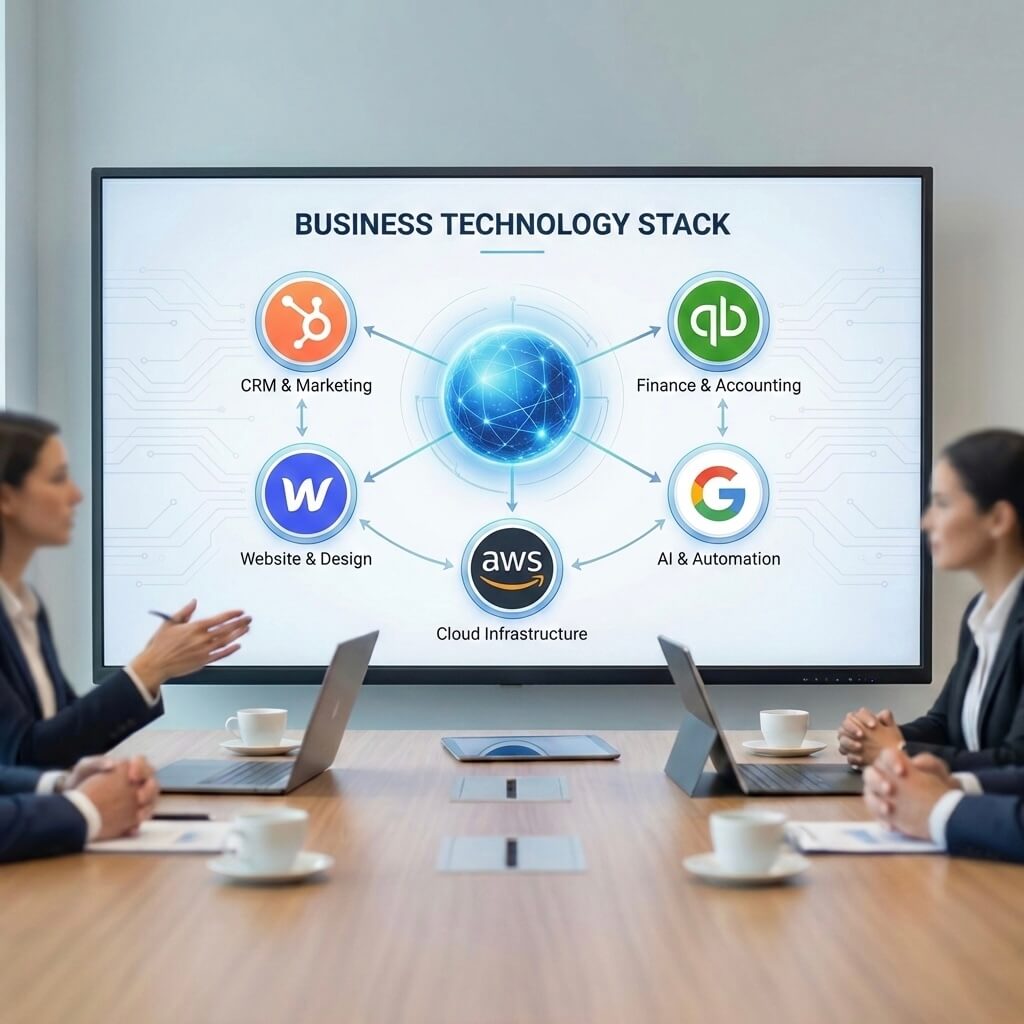
Leaders need a clear way to decide what to fix, fund, and build next. A roadmap makes dependencies, ownership, risk, and business value visible before budget is committed.
Know what should happen first, what depends on it, and what can wait until the evidence supports the next investment.
Align systems, data, and workflows around the customer journey so technology reduces friction instead of adding another handoff.
Give every priority an owner, milestone, business reason, and measure that leadership can review.
What you gain
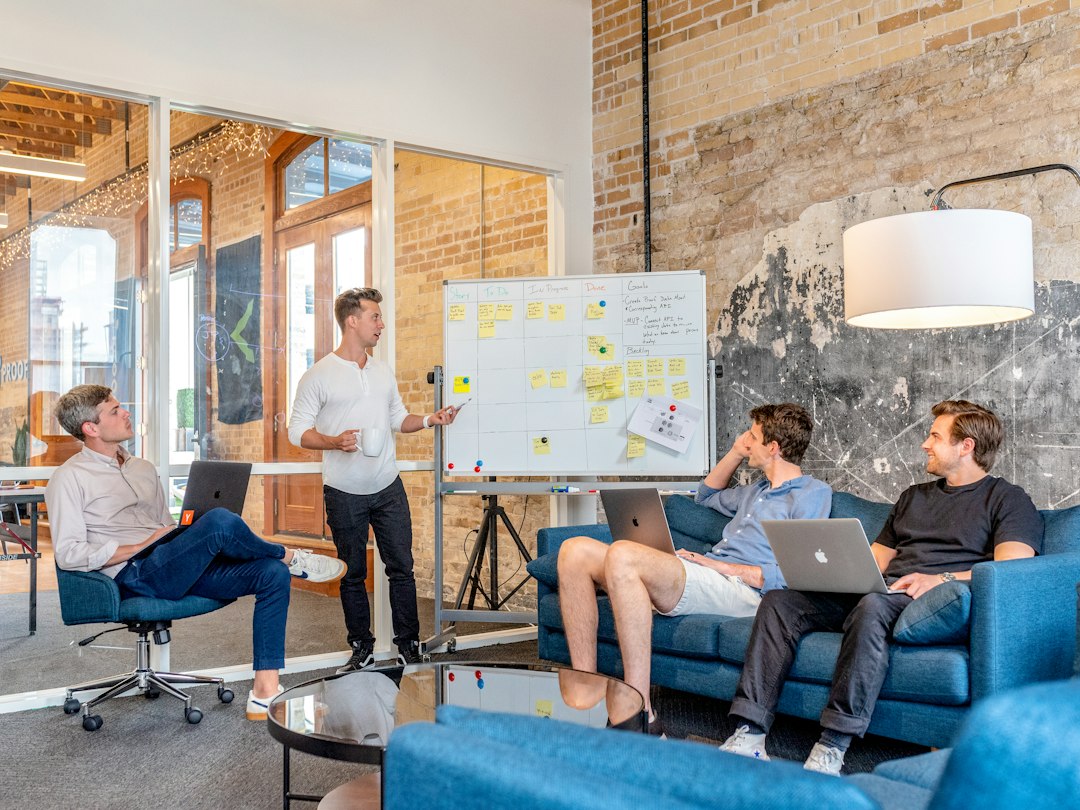
You get a cross-functional view of technology, marketing, operations, and revenue without having to assemble a large internal transformation office.
A technology roadmap should connect business priorities to the systems, data, workflows, and ownership needed to deliver them. VTNH helps leaders move from a crowded list of tools and ideas to a sequenced plan with clear decisions, dependencies, investment ranges, and measures of progress.
Our technology roadmap guide explains the questions a useful roadmap should answer. In an engagement, we review the customer journey, CRM and reporting, marketing operations, team capacity, security, AI readiness, and the handoffs that create rework or revenue leakage.
The result is not a generic technology inventory. It is a practical operating plan that can include digital transformation, CRM architecture and RevOps, marketing automation, responsible AI, website conversion, or a smaller process change that creates value sooner.
For organizations in Vermont, New Hampshire, and New England, technology roadmap consulting gives leadership a written basis for budget conversations and helps the team understand why a change matters before the work begins. We keep the roadmap tied to outcomes such as pipeline visibility, margin, customer experience, speed, and operating capacity.
The VTNH Focus
This illustrative example shows how we bring strategy, process, technology, and Ethical AI together—with oversight by people—to support operational efficiency, more revenue, and new revenue streams.
Illustrative Example · Hypothetical
A hypothetical professional services firm reviews 28 subscriptions, its reporting workload, and a staged plan for improving connected systems.
Invented inventory count for this example.
Assumed total spend, not a verified savings opportunity.
Candidate spend only; savings occur only after cancellation and fee checks.
Assumed time after a prioritized integration and reporting change.
Hypothetical output from reinvesting $800/month for three months.
Assumed inputs for the scenario; excludes spend and fulfillment cost.
Map subscriptions, renewal dates, data owners, and the work each tool supports.
Sequence integrations and reporting improvements by business value, effort, risk, and dependencies.
Confirm contract exit costs and realized savings before moving budget to a measured demand test.
14 assumed hours before − 6 assumed hours after = 8 hours.
2 overlapping licenses × $400; not savings until contracts are actually canceled.
Revenue model · Not a forecast
Calculation: 2 qualified opportunities in the quarter × 25% assumed win rate × $8,000 first-project value = $4,000.
This model excludes the $2,400 quarterly test budget, delivery costs, margin, and cancellation fees. It is not net return or a forecast.
Test a fixed-scope technology roadmap workshop as a paid offer after validating buyer demand and the team's delivery capacity.
All figures and inputs are invented for this example. They are not VTNH client data, verified results, industry benchmarks, forecasts, or guarantees. Modeled sales value is arithmetic based on the stated assumptions, not booked revenue. Replace each assumption with your own baseline before making a decision.
Your path to progress
You start with the highest-leverage constraint, then build the next step into your team’s operating rhythm.
Review goals, customer journeys, systems, data, workflows, risks, constraints, and the work people are doing manually.
Score initiatives by business value, effort, dependency, risk, readiness, and the evidence available to support the decision.
Turn the priorities into a practical 90-day, 12-month, or multi-stage plan with owners, milestones, and review points.
Common questions
Technology roadmap consulting connects business goals to a sequenced plan for systems, data, workflows, integrations, ownership, investment, and measurement.
An implementation plan focuses on delivering one system. A technology roadmap evaluates the broader operating picture so each investment supports the next business priority and does not create another disconnected tool.
Build one when growth is exposing manual handoffs, conflicting priorities, poor reporting, duplicate software, security concerns, or uncertainty about where AI and automation belong.
Yes. VTNH evaluates AI and automation alongside data quality, workflow readiness, human review, privacy, security, and measurable business value.
Proof in practice
Review anonymized growth, marketing ROI, and AI attribution results so you can see the kind of evidence your next plan should create.
Measured result
More pageviews
A connected B2B website and CRM growth system reached 42,000 total pageviews while generating higher-intent demand.
Read the case studyMeasured result
AI-attributed sales
In 2026, AI discovery accounted for 15% of sales attribution, creating a practical baseline for evaluating the channel.
Read the case studyMeasured result
Organic visitors became new clients
A redesigned website and connected go-to-market system established a clear baseline for acquisition value.
Read the case studyBring the systems, workflow, data, or AI decision that needs a clearer next step. We will help you establish the baseline and sequence the work.