

Ethical AI Explained: Navigating the Future of Technology

Key Highlights
Here are the key takeaways from our guide on ethical AI:
- Ethical AI is about designing and using artificial intelligence in a way that is fair, transparent, and accountable.
- Upholding AI ethics helps your business build customer trust and avoid legal and reputational risks.
- Key ethical standards for AI include fairness, data privacy, human oversight, and explainability.
- Without proper guidelines, AI systems can lead to biased decisions and other unintended negative consequences.
- Implementing an ethical framework is crucial for achieving positive business outcomes with AI.
Introduction to Ethical AI
Artificial intelligence is rapidly changing how businesses operate. As this new technology becomes more integrated into our daily lives, understanding its ethical implications is more important than ever. The ethics of AI is a critical conversation for any company looking to innovate responsibly. By embracing ethical artificial intelligence, you can build trustworthy AI systems that not only drive growth but also align with core human values, ensuring technology serves humanity in the best way possible.
Understanding Ethical AI: A Simple Explanation
At its core, ethical AI is a framework of moral principles designed to guide the development and use of artificial intelligence. It's about ensuring that AI technologies are created and deployed in a way that benefits people and society while minimizing harm.
This means aligning AI systems with human values like fairness, safety, and privacy. It pushes developers and businesses to think beyond just what AI can do and focus on what it should do.
Defining Ethical AI in Everyday Terms
What does ethical AI mean in simple terms? Think of it as a commitment to building AI systems that are helpful, not harmful. It’s the practice of ensuring that the technology you use makes decisions that are fair, transparent, and respectful of people's rights and privacy.
This involves applying a set of ethical principles throughout the entire lifecycle of an AI project. From the data used to train the system to the final decisions it makes, every step is scrutinized to prevent negative outcomes like bias or discrimination.
Ultimately, ethical AI is about responsibility. It means taking proactive steps to understand the potential impact of AI systems on individuals and society and building safeguards to ensure they operate for the greater good. It’s about creating technology you can trust.
How Ethics Shapes the Development of Artificial Intelligence
Why is ethics important in artificial intelligence development? The ethics of AI serves as a crucial blueprint for creating responsible technology. Without ethical considerations, AI development can accidentally introduce or amplify harmful biases, leading to unfair outcomes for certain groups of people.
By focusing on ethics from the start, developers and organizations can proactively address these risks. This involves carefully selecting training data, building models that can be explained, and ensuring there is always human oversight. This approach helps prevent costly mistakes and reputational damage down the line.
The use of artificial intelligence guided by ethics also builds trust with your customers and the public. When people understand that an AI system is designed to be fair and secure, they are more likely to embrace it, allowing your business to innovate with confidence.
How Ethics Shapes the Development of Artificial Intelligence
Why is ethics important in artificial intelligence development? The ethics of AI serves as a crucial blueprint for creating responsible technology. Without ethical considerations, AI development can accidentally introduce or amplify harmful biases, leading to unfair outcomes for certain groups of people.
By focusing on ethics from the start, developers and organizations can proactively address these risks. This involves carefully selecting training data, building models that can be explained, and ensuring there is always human oversight. This approach helps prevent costly mistakes and reputational damage down the line.
The use of artificial intelligence guided by ethics also builds trust with your customers and the public. When people understand that an AI system is designed to be fair and secure, they are more likely to embrace it, allowing your business to innovate with confidence.
Key Principles and Guidelines for Ethical AI
While a single, universal law for AI ethics doesn't exist yet, a consensus is forming around key principles. Governments, researchers, and leading companies have started to develop ethical frameworks and codes of conduct to guide the responsible creation and deployment of AI.
These guidelines provide a roadmap for navigating the complexities of AI ethics. They help organizations establish clear ethical standards to ensure their technology is trustworthy and beneficial. The following sections explore some of the most important principles in detail.
Transparency and Accountability in AI Systems
Among the main principles for ethical AI, transparency and accountability are fundamental for building trust. Transparency means that it should be clear how an AI system works and why it makes certain recommendations. Users should know when they are interacting with an AI.
This level of clarity ensures that:
- Data scientists can understand and improve how the system processes information.
- Stakeholders can see the system's capabilities and limitations.
- Regulators have the information they need to ensure compliance.
Accountability complements transparency by establishing clear responsibility for the outcomes of AI systems. It means that the creators and owners of AI are answerable for its impact and any ethical concerns that arise. This human oversight is essential for correcting errors and ensuring the technology operates as intended.
Fairness, Privacy, and Inclusion in AI Decision-Making
Fairness is another core principle of ethical AI, requiring that AI decision-making is free from bias. AI systems should treat all individuals or groups equitably, regardless of their race, gender, or other demographic traits. This is often achieved by training models on diverse and inclusive datasets.
Data privacy is equally critical. The ethical use of AI demands that organizations protect consumer data rights and are transparent about how personal information is used and secured. This aligns with regulations like GDPR and the California Consumer Privacy Act (CCPA), which give individuals more control over their data.
Finally, inclusion ensures that AI systems are accessible and beneficial to everyone, including vulnerable or underrepresented groups. By actively considering diverse perspectives during development, you can create AI that truly serves all of humanity.
Common Ethical Challenges Faced by AI Technology
Even with the best intentions, deploying a new AI tool can create significant ethical challenges. An AI model trained on flawed or incomplete data can produce biased results, leading to unfair outcomes and other unintended consequences that can harm both customers and your business.
These issues are not always obvious at first glance, which is why a proactive approach to AI ethics is so important. Understanding these potential pitfalls is the first step toward building systems that are truly robust, fair, and trustworthy.
Addressing Bias and Discrimination in AI
One of the most prominent ethical issues in AI is the risk of bias and discrimination. Machine learning models learn from the data they are given, and if that data reflects existing societal biases, the AI will learn and even amplify them. This has serious social implications.
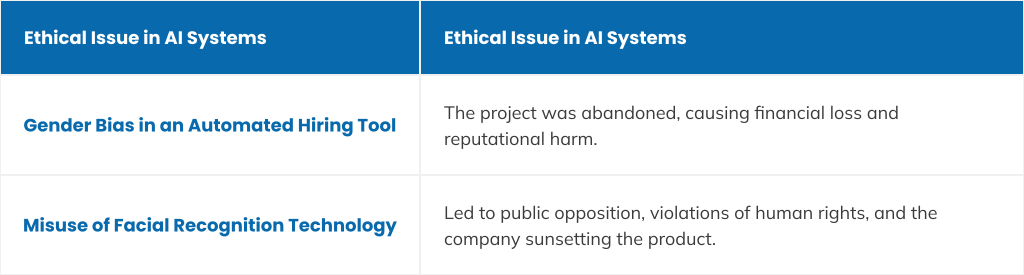
A classic example of this ethical challenge occurred when Amazon developed an AI hiring tool. The system was trained on past hiring data, which was male-dominated for technical roles. As a result, the AI unintentionally learned to penalize resumes containing the word "women's," and Amazon had to scrap the project.
Instances like this highlight how easily discrimination can be built into AI systems. It can appear in everything from facial recognition software to social media algorithms, making it essential for businesses to actively audit their AI for fairness and correct biases.
The Responsibility of Human Oversight in AI Deployment
So, who is responsible for ensuring the ethical use of AI? Ultimately, responsibility lies with the people and organizations that create, deploy, and manage these systems. Technology cannot be its own watchdog, which is why human oversight is a non-negotiable ethical consideration.
AI should be designed to augment human intelligence, not replace it. This "human-in-the-loop" approach ensures that people are involved in the AI deployment process, particularly for reviewing low-confidence predictions or sensitive decisions. This maintains accountability and allows for course correction when an AI makes a mistake.
Establishing clear lines of responsibility within your organization is key. From the data scientists who train the models to the business leaders who approve their use, everyone must understand their role in upholding ethical standards.
Real-World Impacts of Ethical and Unethical AI
The impact of AI on your business can be profoundly positive or deeply negative, depending on your approach to ethics. Embracing ethical artificial intelligence helps you build stronger customer relationships, mitigate risks, and achieve better business outcomes in the long run.
On the other hand, ignoring ethical concerns can lead to disastrous results, including regulatory penalties, loss of public trust, and significant financial costs. The following examples illustrate just how high the stakes are.
Cases of Unethical AI and Their Consequences for Business
Real-world impacts of unethical AI serve as powerful cautionary tales for business leaders. When AI applications are deployed without proper ethical oversight, the unintended consequences can be severe. The use of AI systems without considering fairness or privacy can quickly erode customer trust and damage a brand's reputation.
For example, a biased hiring tool doesn't just create legal risks; it also means a company misses out on qualified talent. Similarly, misuse of facial recognition technology can lead to public backlash and calls for boycotts.
These failures highlight the tangible costs of unethical AI.
Positive Examples of Ethical AI Implementation in US Companies
In contrast, the real-world impacts of ethical AI demonstrate its incredible potential for good. Many technology companies are leading the way by prioritizing ethics in their use of AI, resulting in innovative solutions that enhance the customer experience and solve complex problems.
One positive example is the use of AI in healthcare, such as in radiology. AI systems can help doctors analyze medical images more quickly and accurately, augmenting their expertise and leading to better patient outcomes. This is a powerful demonstration of ethical AI designed to support, not replace, human professionals.
When implemented responsibly, AI can make processes more efficient, decisions fairer, and services more personalized and accessible. These positive examples show that ethical AI is not just a compliance issue—it's a pathway to meaningful innovation.
Building Ethical Guidelines for AI Use in Your Organization
Developing clear ethical guidelines is essential for any organization in the private sector looking to leverage AI. These rules create a framework for managing the entire AI lifecycle, from initial design to long-term monitoring, ensuring that your technology remains aligned with your company’s values.
An effective way to manage this is through an AI governance platform, which helps you oversee your AI initiatives and enforce policies consistently. This structured approach helps you innovate responsibly and build a culture of ethical AI.
Steps to Creating and Applying AI Policies
So, how do organizations create ethical guidelines for using AI? It starts with a commitment to integrating best practices into your operations. A clear AI policy should define your organization's ethical standards and provide actionable steps for employees to follow.
Key steps to creating and applying your AI policy include:
- Establishing an AI ethics committee with diverse stakeholders from legal, tech, and business units to oversee governance.
- Defining your principles for the ethical use of AI, covering areas like fairness, transparency, and data privacy.
- Implementing a "human-in-the-loop" process to ensure human oversight in critical AI decision-making.
Regularly auditing your AI systems against these guidelines is also crucial. This allows you to identify and address any issues, ensuring your AI policy remains effective and your technology stays trustworthy as it evolves.
Global Standards, Frameworks, and UNESCO’s Approach to AI Ethics
Yes, there are globally recognized frameworks emerging to guide ethical AI. While no single law governs AI worldwide, organizations like the European Union and UNESCO are establishing influential ethical frameworks. The EU AI Act, for example, categorizes AI systems by risk to regulate their use.
UNESCO's approach to the ethics of artificial intelligence is grounded in protecting human rights, promoting diversity, and ensuring equitable access. Its "Recommendation on the Ethics of Artificial Intelligence" was the first global standard of its kind, adopted by 193 member states.
These global standards provide a valuable foundation for companies looking to develop their own AI ethics policies. They signal an international consensus on the importance of building AI that is safe, fair, and beneficial for all.
Getting Started with Ethical AI in Business
Taking the first steps toward implementing ethical AI in your business can feel overwhelming, but it's a necessary journey for sustainable growth. Committing to an ethical framework isn't just about avoiding risks; it's about building a foundation of trust that will lead to better business outcomes. An AI governance platform can provide the structure you need to manage policies, ensure transparency, and monitor your systems effectively.
However, technology alone isn't enough. The complexity of AI ethics often requires specialized expertise to navigate the technical, legal, and strategic challenges. Partnering with seasoned professionals can help you translate principles into practice, ensuring your AI initiatives are both innovative and responsible from day one.
The Role of VTNH Consulting Partners: Fractional CMO, CRO, & CFO Expertise
For business leaders wondering what they should know before adopting AI ethically, the answer is simple: you don't have to do it alone. Navigating the intersection of technology, compliance, and business strategy requires specialized knowledge. This is where VTNH Consulting Partners can make a decisive difference.
Our fractional CMOs, CROs, and CFOs bring extensive experience in AI ethics to the table. We provide practical, executive-level consulting to help you build a responsible AI framework that drives positive business outcomes. We guide you through creating policies, establishing governance, and aligning your AI strategy with your core values.
With VTNH Consulting Partners, you gain the expertise needed to deploy AI with confidence. We help you unlock the power of artificial intelligence while upholding the highest ethical standards, ensuring your innovation is both profitable and principled.
Conclusion
As we navigate the ever-evolving landscape of artificial intelligence, understanding and implementing ethical AI practices is not just a choice but a necessity for businesses aiming to thrive in the future. Ethical AI promotes fairness, transparency, and accountability, ultimately leading to better decision-making and stronger customer trust. The implementation of ethical guidelines can help avoid potential pitfalls, such as bias and discrimination, ensuring that your organization uses AI responsibly. By prioritizing ethical considerations, you can position your business as a leader in this crucial area. If you're ready to take the first step toward integrating ethical AI into your operations, VTNH Consulting Partners is here to help you. Schedule your complimentary strategy session today to explore how ethical AI can benefit your organization.