

Beyond AI Efficiency: Why 2026 is the Year of the "Human Premium"

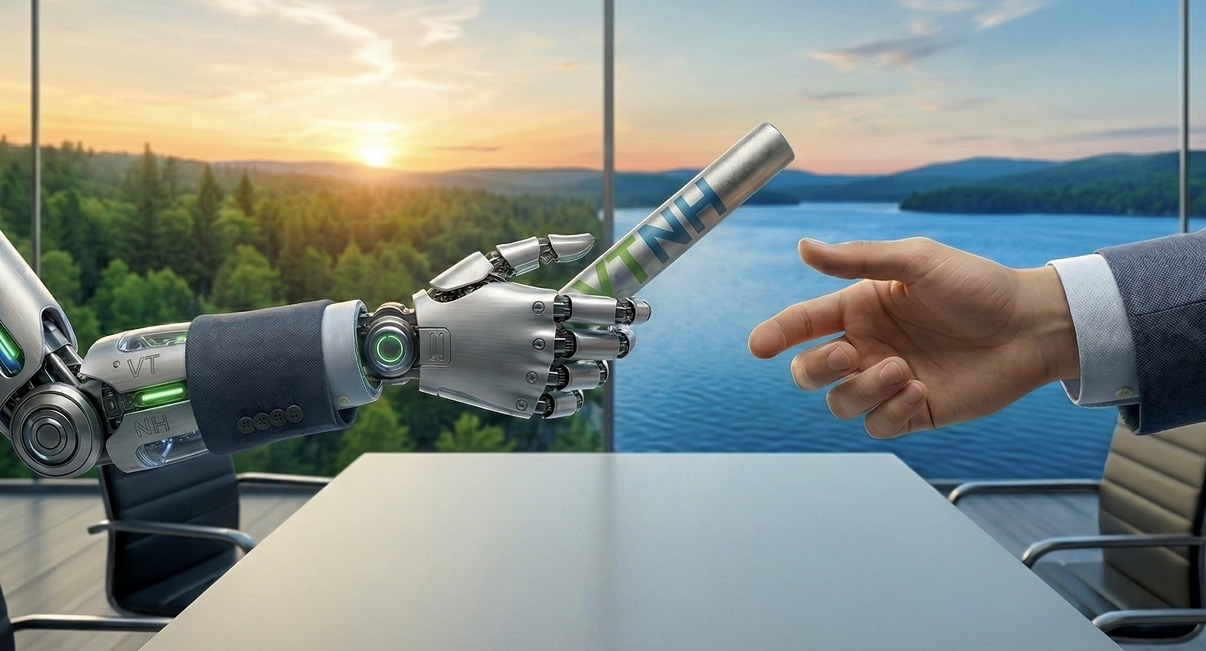
Let’s be real. It’s 2026. If you’re still treating AI like a novelty or a novelty, you’re already behind the curve.
If you’re running a $5M+ business here in New England, you have access to the same "enterprise-grade" tools as the billion-dollar conglomerates. Digital transformation isn't a future goal; it’s the air we breathe. But here is the cold, hard truth most consultants are too scared to admit: AI is turning your expertise into a commodity.
When anyone can pay $20 a month to generate a "perfect" strategy or a 3,000-word SEO masterpiece, the raw value of "knowing things" has hit rock bottom. If everyone is running the same automated playbook, no one has an edge. At VTNH Consulting Partners, I’m seeing the shift firsthand. The real wins aren’t coming from those with the best AI implementation—they’re coming from the brands with the guts to keep it human.
Welcome to the Human Premium Economy.
What is the "Human Premium" Economy?
Think of it like the difference between a drum machine and a live drummer. The machine is perfect. It never misses a beat, and it never gets tired. But it has no soul. It doesn’t know when to lean into the groove, when to hit the crash a little harder for emphasis, or when to hold back to create tension.
The Human Premium Economy is the market’s response to a world flooded with "perfect" synthetic noise. It’s the realization that value no longer lives in the output—which is now cheap and abundant—but in the judgment, intent, and grit behind it. The Medium recently called this "The Human Premium Principle." I see brands who keep humanity at the center of the brand as a driver of trust and revenue, thus the term "The Human Premium Economy."
In 2026, clients and consumers are exhausted by the "uncanny valley" of automated relationships. They are becoming increasingly willing to pay a massive premium to know a real person is steering the ship.
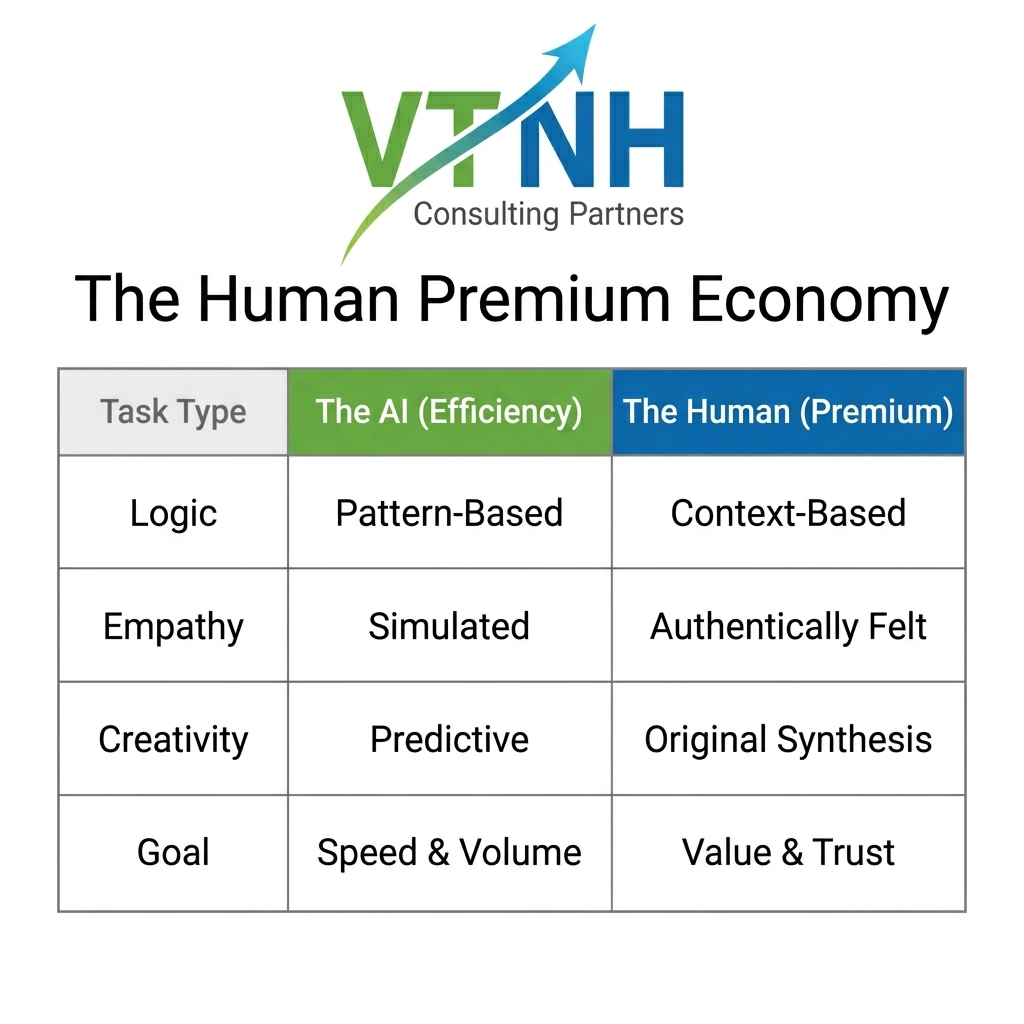
3 Ways New England Businesses Can Command a Premium in 2026
To stay relevant, you must lean into the things a machine literally cannot synthesize. Here’s how we’re helping our partners use AI as a foundation while pivoting back to a human-centric focus:
1. Implementing the "Analog Anchor" (Strategic Friction)
In an era where everything is frictionless and instant, "fast" has become boring. We are currently advising firms to identify one Analog Anchor—a specific part of the client journey where AI is strictly banned.
Maybe it’s your initial discovery call, a deep-dive strategy session, or a physical, handwritten letter sent after a deal is inked. When every competitor is automated, "slow and human" becomes the scarce advantage.
2. Radical Accountability & Human Grit
AI can generate a report, but it cannot take responsibility for the results. In the Human Premium Economy, your value lies in being the person who stands behind the data. Clients in 2026 aren't just buying solutions; they are buying the peace of mind that comes from a human partner who has "skin in the game."
3. Hyper-Local Context and Community
While AI has global knowledge, it often lacks local soul. For businesses in New England, your "Human Premium" is your connection to the community. Doubling down on physical presence, local partnerships, and regional nuances creates a barrier to entry that a large-language model simply cannot cross.
The Bottom Line: Use AI to handle the commodity work, but use your humanity to command the premium.
Frequently Asked Questions
What does the human premium mean in an AI-driven market?
The human premium is the value created by judgment, intent, trust, and responsibility when automated output becomes abundant. It means customers can still distinguish a business by the quality of its decisions and relationships, not only by how quickly it produces content.
Why does human judgment still matter when AI can generate strategy and content?
AI can produce options, but leaders remain responsible for choosing the right problem, understanding context, protecting customers, and accepting the consequences of a decision. Those human choices shape whether an AI-assisted experience feels useful or generic.
How can a business use AI without losing customer trust?
Use AI to reduce repetitive work while protecting human ownership of discovery, advice, exceptions, and high-consequence decisions. Establish clear review points and make the human role visible where trust matters most.
How can a New England business put the human premium into practice?
Choose a few customer moments that should remain deliberately human, such as the first strategy conversation or a complex service review. Then automate the surrounding coordination so the team has more time for those moments. VTNH Consulting Partners combines AI efficiency with relationship-led growth.